Apple’s move from Intel to its own Apple Silicon has reshaped the computer industry. From the first M1 chip to the upcoming M5 generation, each step marks a leap in performance, efficiency and integration. Here is a full look at the Apple Silicon journey and what the future holds.
Apple 🍎

M1 A New Era 2020
When Apple introduced the M1 in November 2020 it wasn’t just a processor it was a statement of independence from Intel. Built on TSMC’s 5 nm process the M1 featured an 8 core CPU an integrated GPU and the unified memory architecture that became Apple Silicon signature.
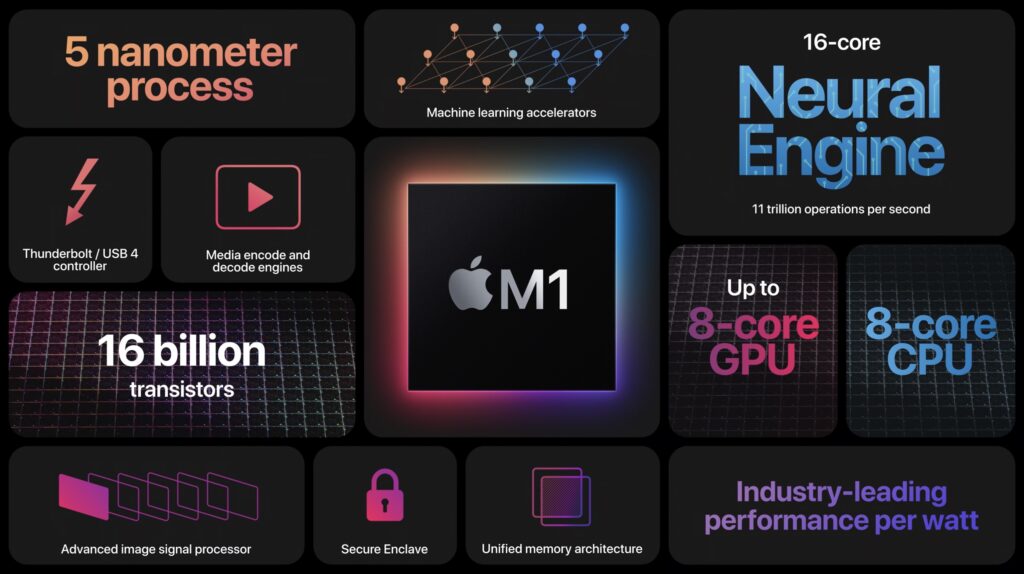
- 5 nm TSMC process
- 8 core CPU 4
- 8-core GPU
- Up to 16 GB unified memory
- Massive performance jump over Intel Macs.
⚡ M2
M2 released in mid 2022 refined the M1 architecture with second generation 5 nm technology.
Apple focused on improving efficiency and graphics rather than reinventing the architecture.
- June 2022
- M1 architecture with improvements in performance, efficiency.
- Up to 18 % faster CPU and 35 % faster GPU vs M1
- 24 GB unified memory support
- Enhanced media engine for 4K and 8K video.
M3
- October 2023
- Another iteration, bringing further process improvement, efficiency and performance gains over M2.
- Hardware accelerated ray tracing and mesh shading.
- Up to 24 GB memory faster Neural Engine.
The M3 chips arrived in the 24-inch iMac and MacBook Pro 14/16, setting a new efficiency benchmark.
M4
M4 released in May 2024 pushed Apple Silicon into a new era of on device AI and advanced graphics.
Built on an improved 3 nm N3E node it focused on better machine learning performance and display management.
- May 2024
- According to leaks rumours this upgraded many Macs and extended Apple silicon roadmap.
M5
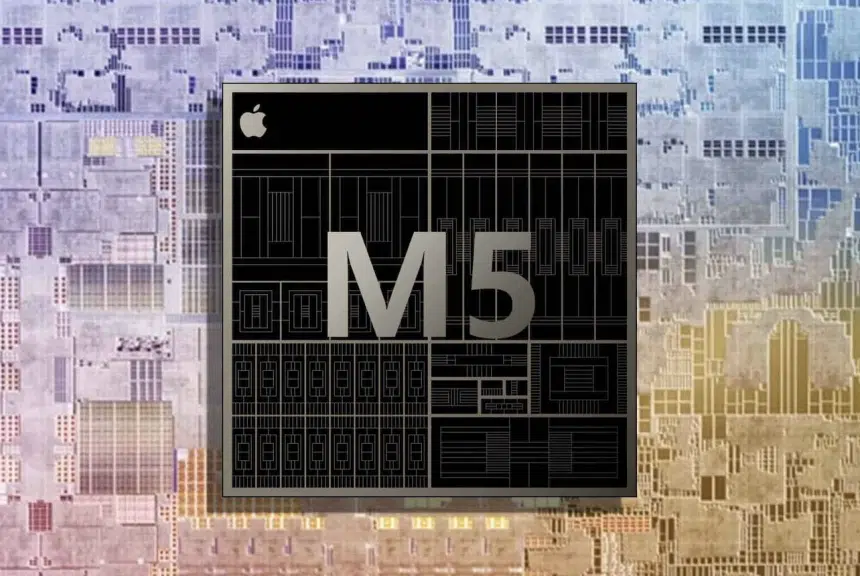
The M5 series is Apple’s upcoming generation, reportedly built on TSMC’s N3P 3 nm Enhanced process.
While Apple has not officially announced it yet leaks indicate significant advances in performance efficiency and AI integration.
- Smaller devices or less premium models may get M5 sooner larger high end may wait.
- After M5 attention is already on future chips M6 M7 soon.
Silicon Roadmap
| Year | Chip |
| 2020 | M1 |
| 2021 | M2 |
| 2022 | M3 |
2023 | M4 |
2025/2026 | M5 |
| Process | Key Devices | Improvement |
| 5 nm (N5) | MacBook Air, Pro, mini | Intel to Apple Silicon transition |
| 5 nm (2nd gen) | MacBook Air/Pro, Studio | More graphics & efficiency |
| 3 nm (N3B) | iMac, MacBook Pro | Big efficiency jump, AI boost |
| 3 nm (N3E) | iPad Pro, Mac mini | AI and display engine upgrade |
| 3 nm (N3P) | MacBook Pro, Mac mini (2025) | Higher AI power and 3 nm efficiency lead |
According to early leaks the M6 expected in 2026 27 may introduce a 2 nm process and feature hardware AI acceleration for mac OS integrated intelligence. Apple reportedly plans to integrate these chips into redesigned Macs with OLED displays and improved thermals.
The M4 devices already offer excellent value and power. But for those seeking the bleeding edge, M5 and its AI driven design may mark the next big leap in Apple’s ever evolving silicon story.