It has just been learned that China has taken an extraordinarily aggressive position on trade Trump wrote in a social media post. They have sent an extremely hostile letter to the world, stating that, effective November 1, 2025, they plan to impose large-scale export controls on nearly every product they produce—and even on some they do not.
Ahead of the planned summit between U.S. President Donald Trump and Chinese President Xi Jinping, both nations have taken fresh steps to restrict the flow of technology and critical materials.
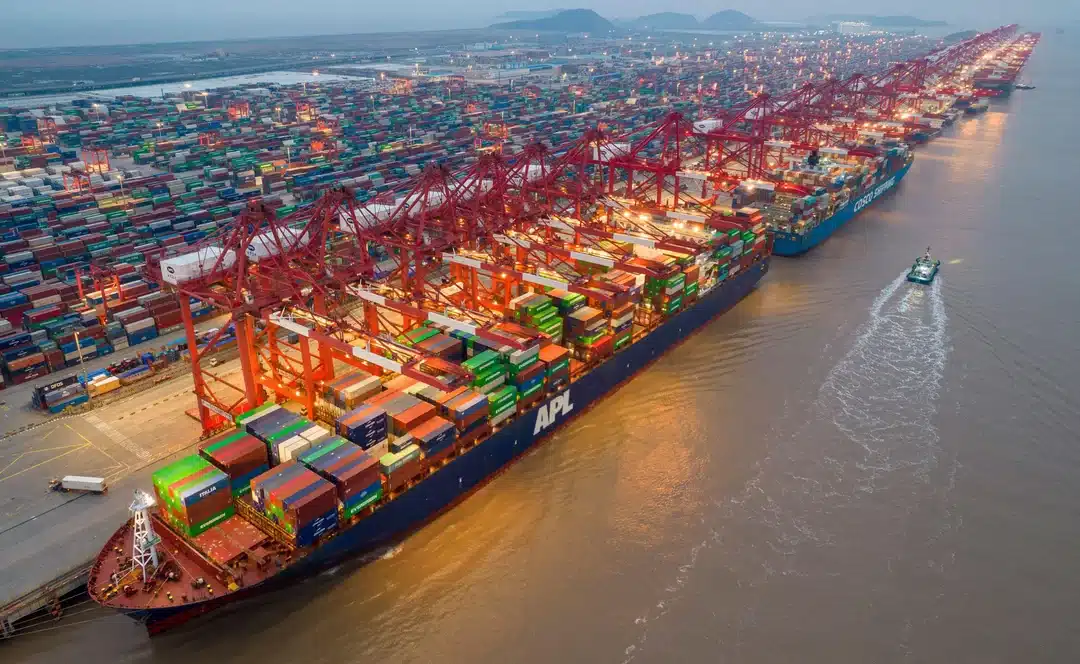
In its latest move, China imposed new port fees on U.S. ships and launched an antitrust investigation into Qualcomm Inc., following renewed efforts to limit exports of rare-earth minerals essential for products such as motors, semiconductors, and fighter jets.
The growing list of trade threats appears aimed at gaining leverage before the high stakes talks. Some of China’s new measures are scheduled to take effect on November 8, meaning they will not yet be active when the two leaders are expected to meet. Still, businesses on both sides are scrambling to adapt to a volatile trade environment — compounded by Trump’s threat of even more aggressive action.
“This back and forth indicates the fragility of the bilateral relationship, said Wendy Cutler, a former U.S. trade negotiator. It is by no means certain that cooler heads will prevail in time for a de-escalation before the summit.
From the Oval Office, Trump suggested he could expand export restrictions to include airplanes and airplane parts. Meanwhile, the U.S. Trade Representative (USTR) announced a 100% tariff on certain ship-to-shore cranes and cargo handling equipment, directly targeting Chinese-made port machinery.
- Tariffs & Controls: Trump imposed 100% tariffs on certain Chinese goods and warned of more restrictions, including on airplane parts.
- Soybean Impact: Ongoing trade friction continues to hurt U.S. farmers, with Washington exploring new Asian markets.
- China’s Response: Beijing introduced new port fees, launched an antitrust probe into Qualcomm, and restricted rare-earth exports.
The new tariffs follow earlier plans to impose additional fees on Chinese-built vessels. The USTR also said it is considering further tariffs of up to 150% on certain cargo-handling equipment imported from China. These moves further cloud the agenda for Trump’s upcoming Asia trip and add uncertainty to negotiations over China’s ongoing ban on U.S. soybean purchases, which has severely impacted American farmers.
U.S. Trade Representative Jamieson Greer told Fox News that his office is seeking ways to support domestic growers. Vietnam and Cambodia have already lowered their soybean tariffs Greer said. We’re also in talks with other Asian nations and within the White House on boosting domestic uses for soybeans.
Beijing, for its part, announced Thursday that overseas exporters of products containing even trace amounts of rare earths must now obtain an export license, citing national security concerns. The Commerce Ministry also said equipment and technologies for processing rare earths and producing magnets will be subject to new controls.
Rare-earth materials remain a flashpoint in the ongoing trade standoff. After Trump raised tariffs on Chinese imports earlier this year, Beijing responded by halting shipments of the minerals to U.S. firms. Although both sides agreed to a temporary truce in the spring—under which Trump eased tariffs and China resumed exports—the relationship has again deteriorated.
Our relationship with China over the past six months has been a good one, which makes this sudden move on trade all the more surprising, Trump said in a Truth Social post. I’ve always felt they were lying in wait — and now, as usual, I’ve been proven right.
Trump also claimed that other global partners had received similar “hostile trade letters” from China and were extremely angry about Beijing’s actions. He criticized the timing of China’s letters, saying they coincided with his planned trip to the Middle East to celebrate a peace deal he helped broker between Israel and Hamas.
The Chinese letters were especially inappropriate, Trump wrote, on the very day that, after three thousand years of conflict, there is PEACE IN THE MIDDLE EAST.